Solution
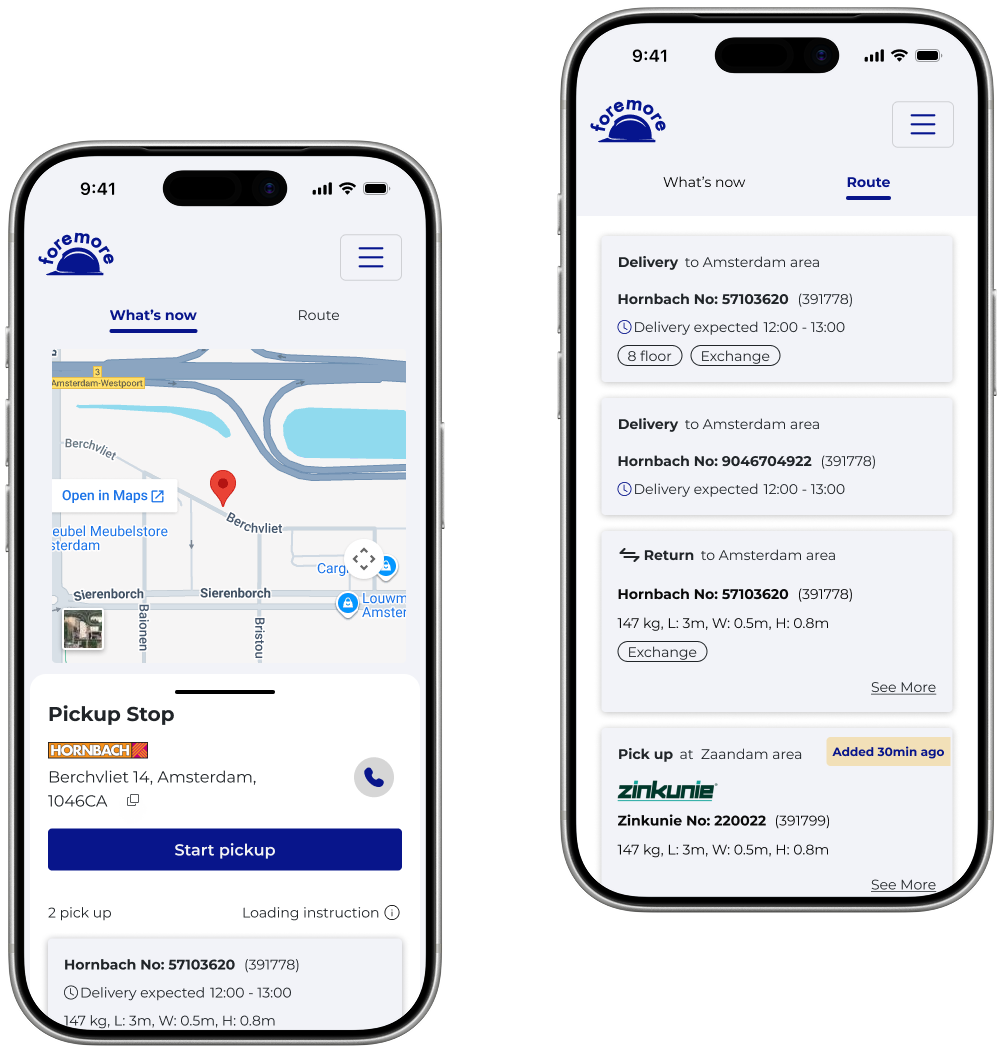
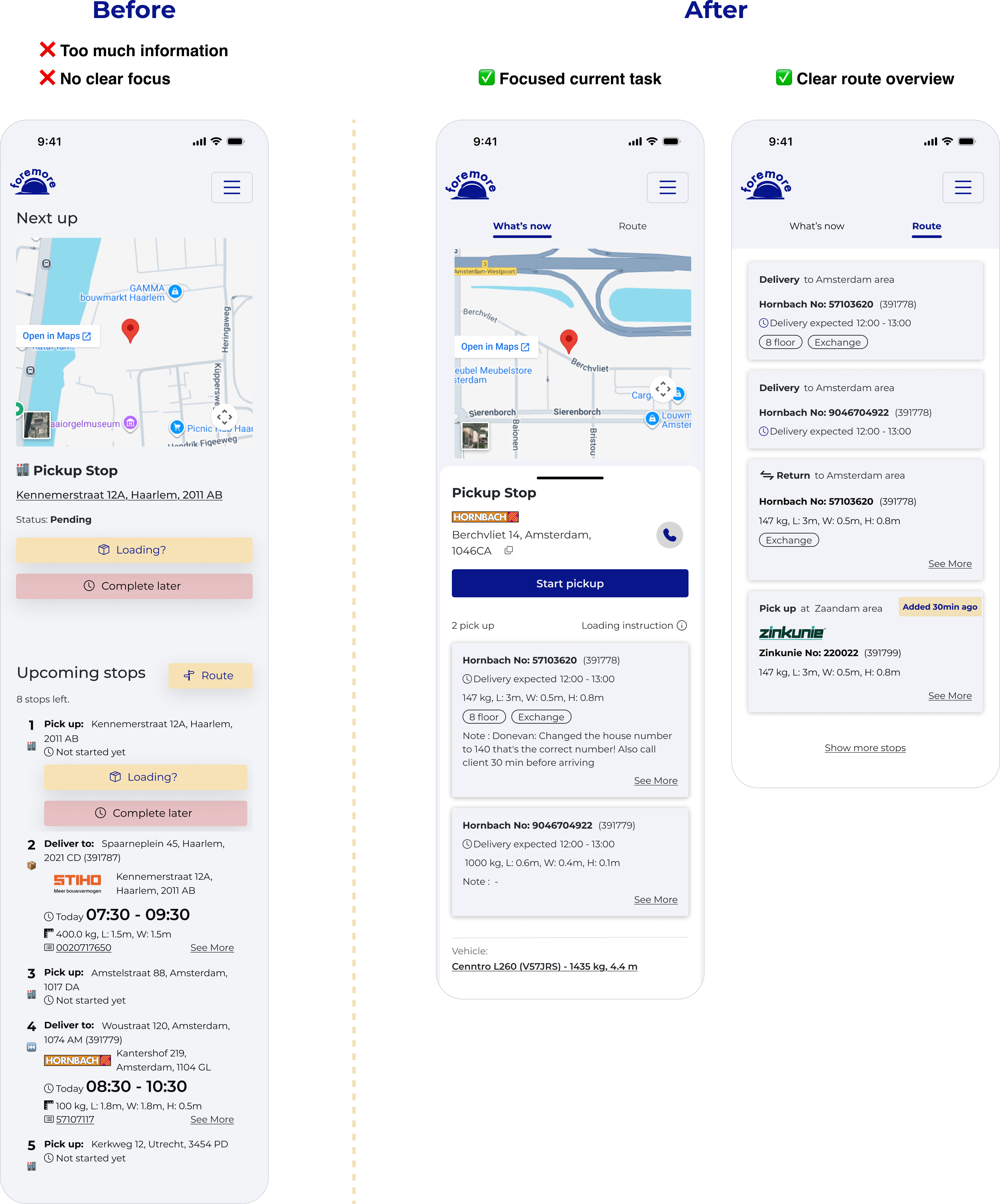
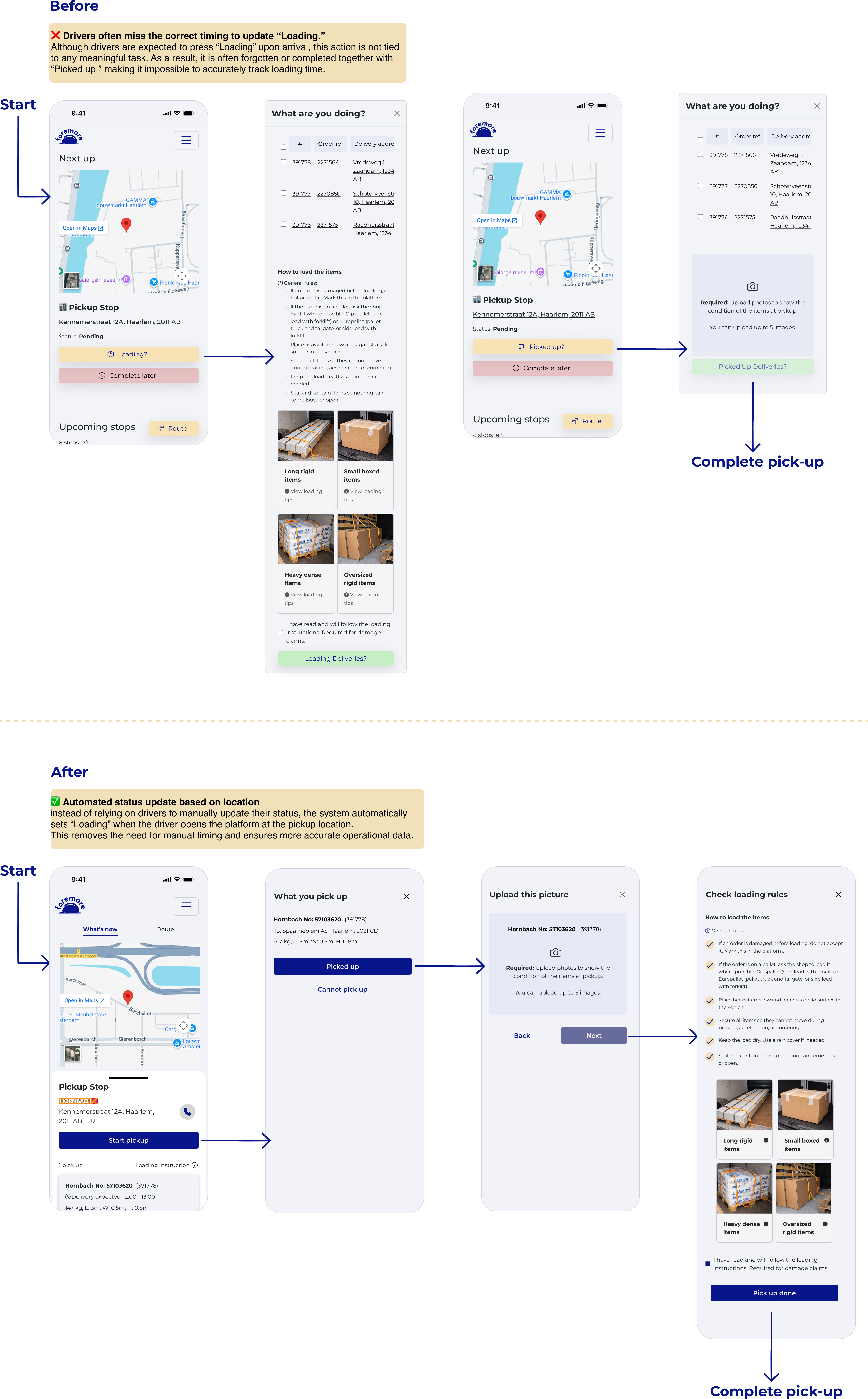
1. Split the interface into two clear sections
I redesigned the driver interface into:
- "What’s now" → focuses only on the current task
- "Route" → shows upcoming stops with limited details
This helps drivers focus on what they need to do now, without being overwhelmed.
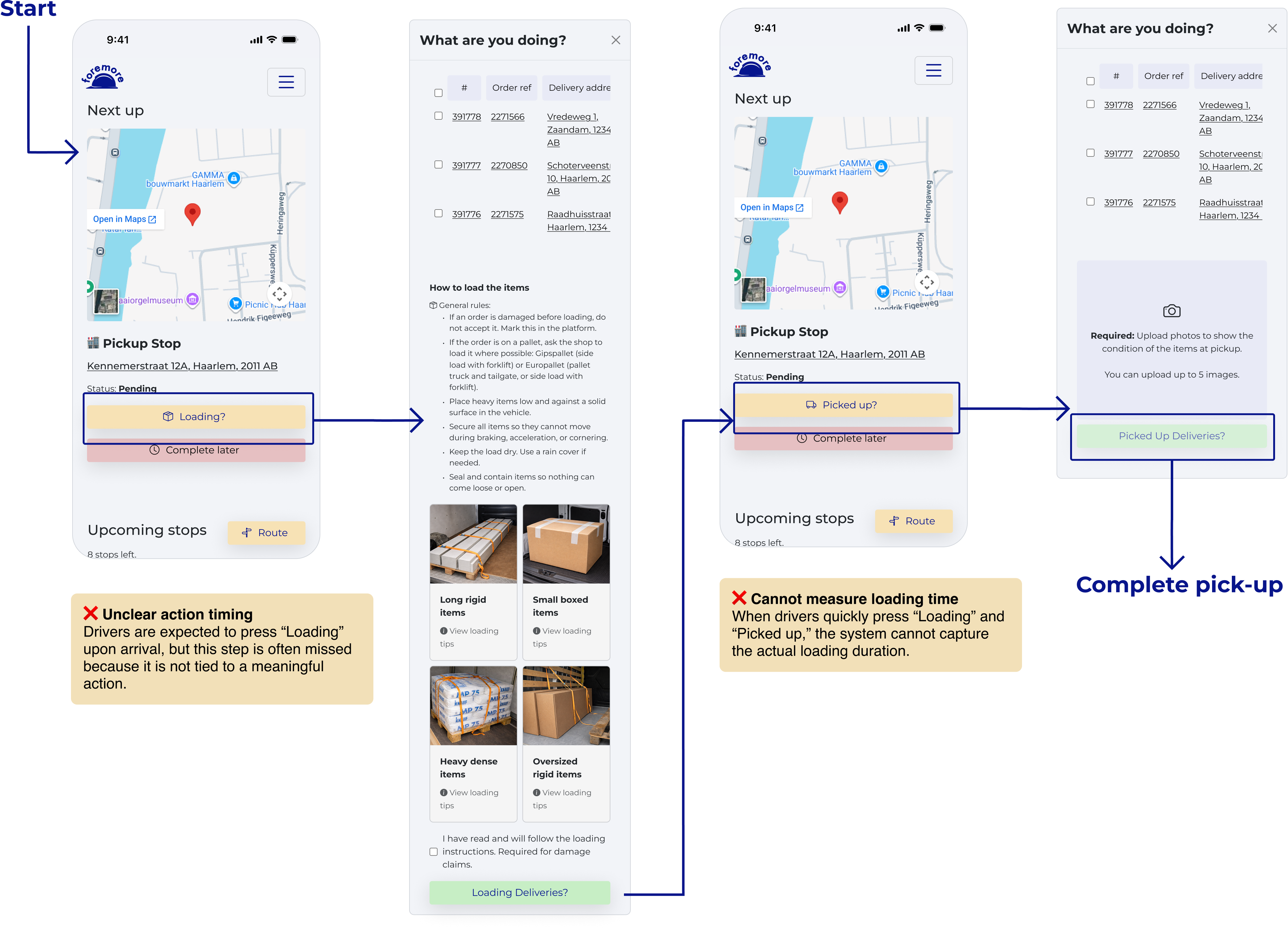
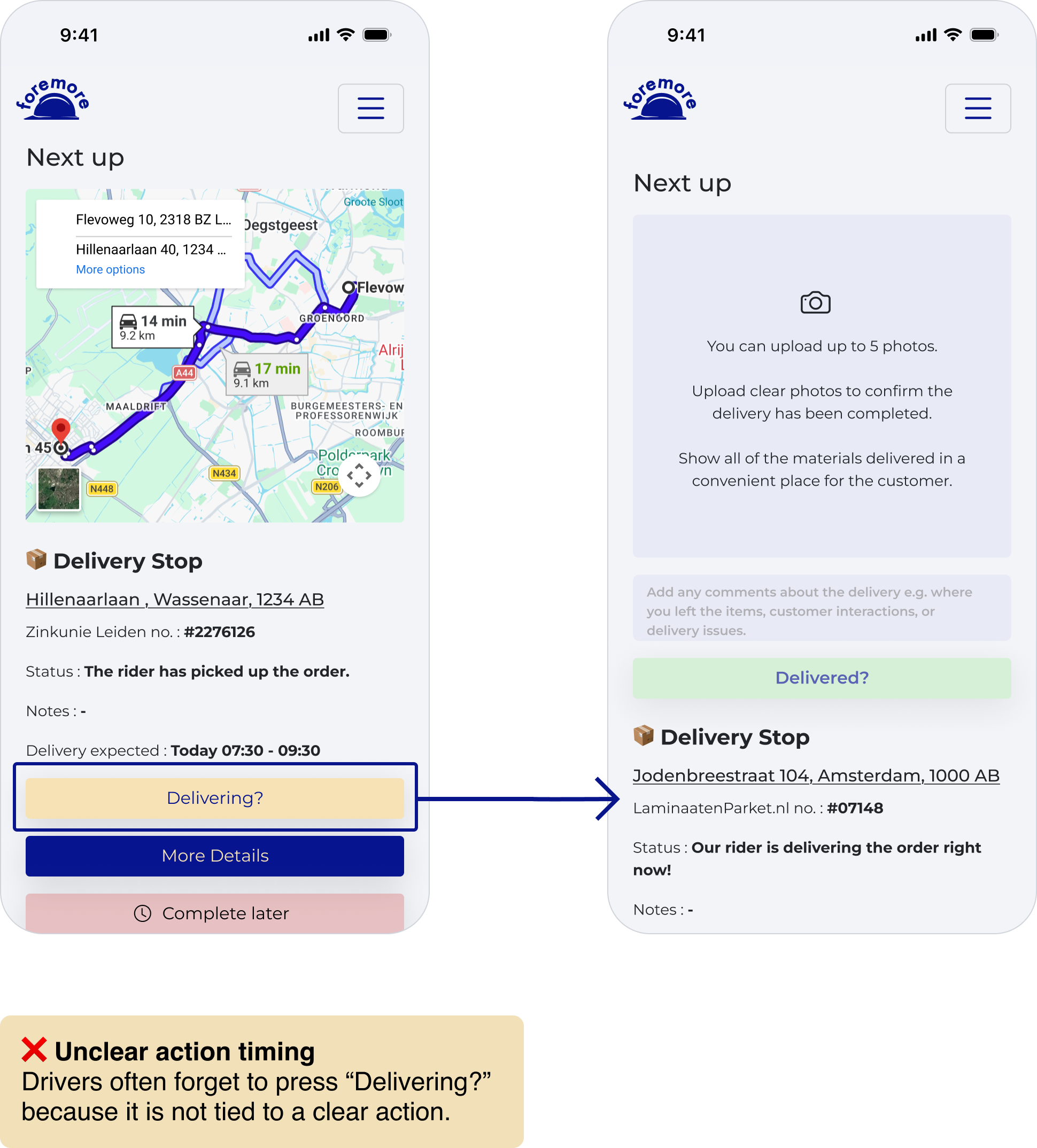
2. Structured task-based flow
I redesigned how status updates work by connecting them more directly to driver actions and system logic.Previously, drivers had to manually press a "Loading" button when arriving at a pick-up location. However, this action was not tied to any other tasks, and drivers often forgot to update it. As a result, we were unable to accurately track loading time.To address this, I removed the manual "Loading" step and introduced an automated solution. When drivers open the platform at the pick-up location, the system automatically updates their status.This reduces cognitive load for drivers while ensuring more reliable operational data.
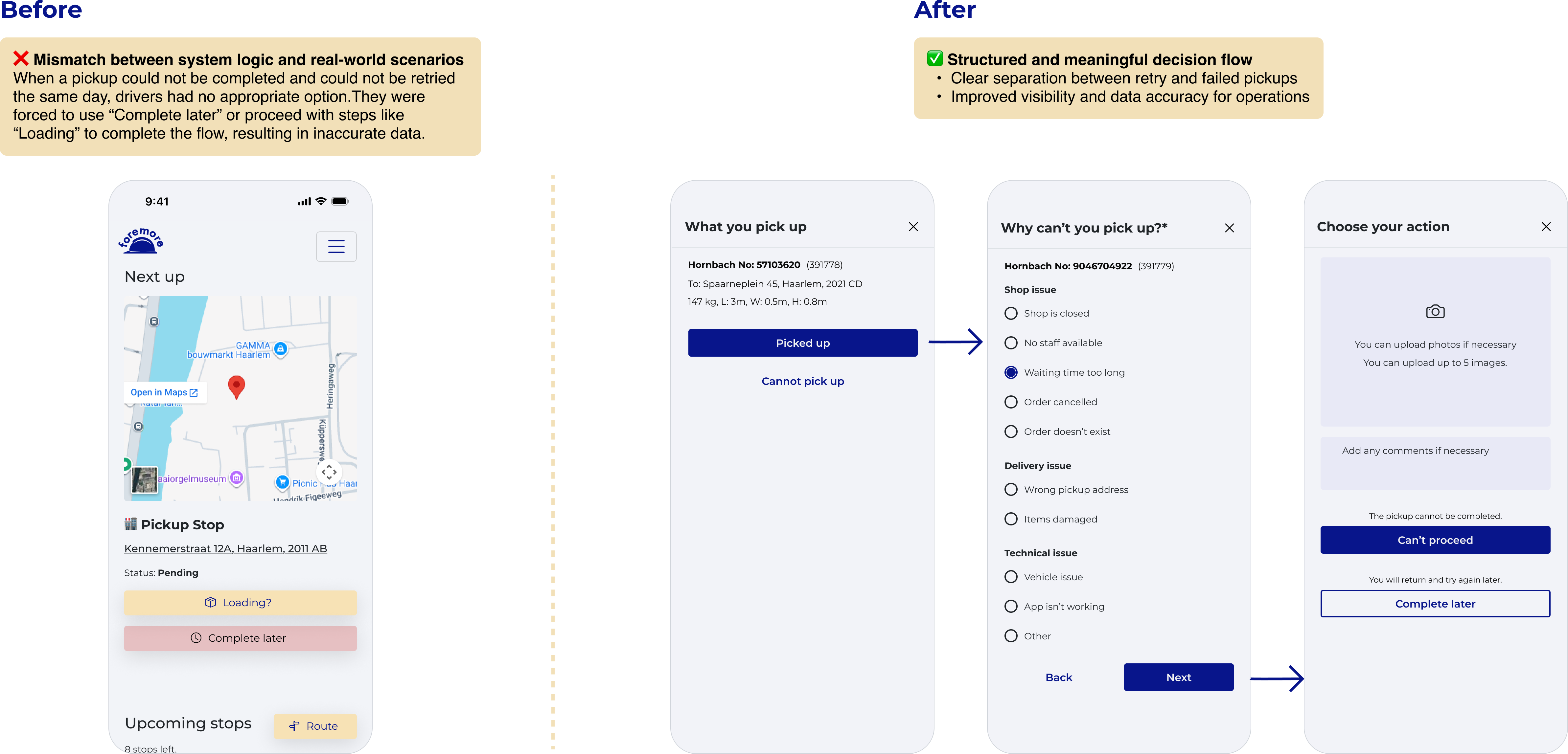
3. New "Cannot proceed" flow
Instead of relying on "Complete later", I introduced a clearer flow:
- Drivers can select reasons (e.g. cancelled, no stock, damaged)
- Orders can be properly marked as not completed
This improves operational clarity and data accuracy.
4. Improved route change communication
I explored ways to make route updates more understandable by:
- Highlighting what changed (not just refreshing the page)
- Linking notifications to specific orders
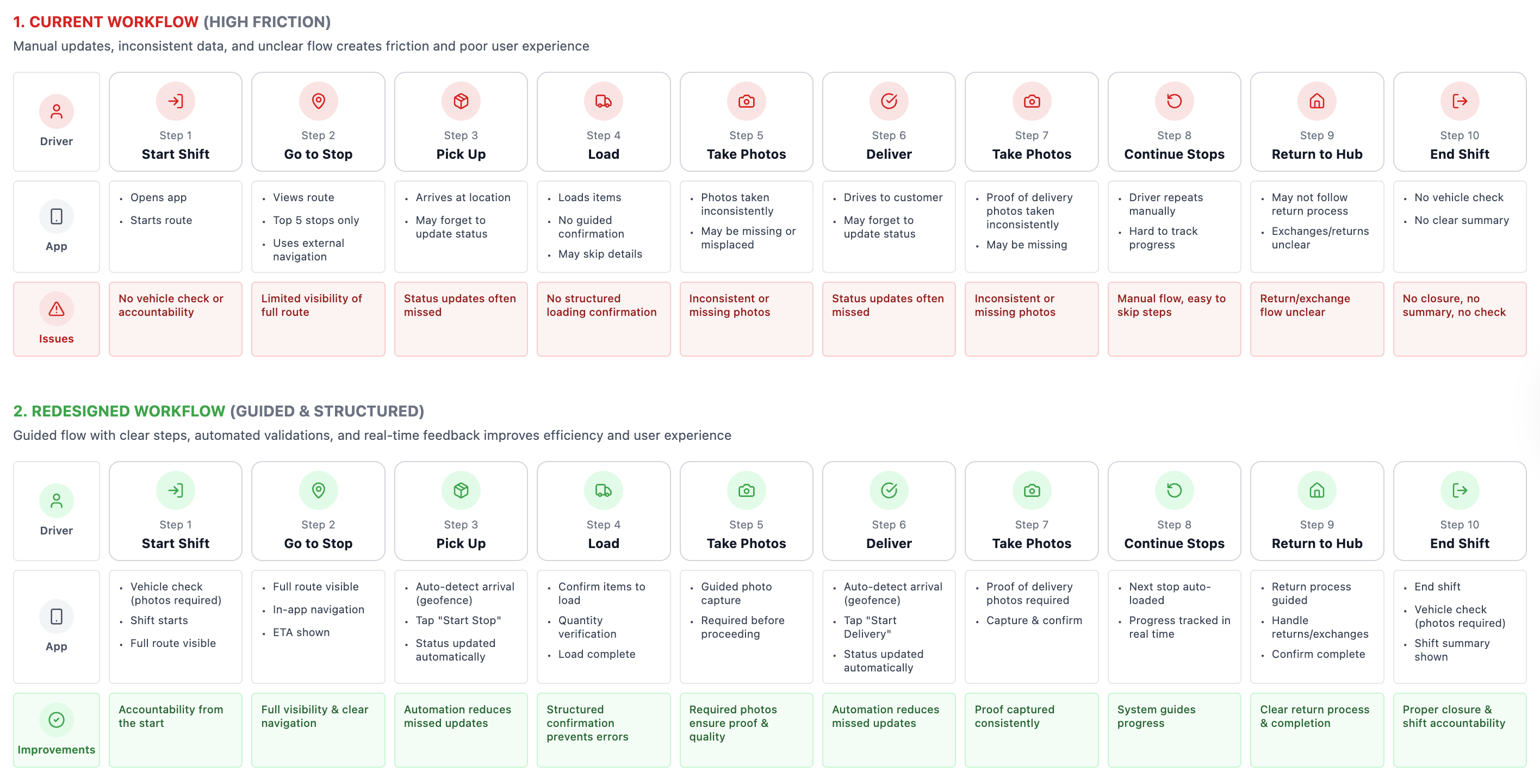
5. Start / End shift improvements
I redesigned the shift flow to create a clearer structure for both starting and ending a shift. Previously, drivers were required to press "Start shift", but "End shift" was often forgotten, leading to incomplete records and operational confusion.To address this, I improved the end-of-shift experience by making the completion of a shift more explicit and structured, helping drivers clearly understand when their work is finished.
I also introduced required photo uploads (interior and exterior of the vehicle) at the start and end of shifts. This creates accountability for vehicle cleanliness and condition, while also providing useful documentation for operations.O verall, the new flow helps ensure more consistent behavior, better data accuracy, and a clearer sense of completion for drivers.